
All of WaterProof's scientific foundations in one place

Access methodological guides, glossaries and key concepts to support your projects

Results found in your search: 12 articles
04/11/2021

Categorization According to Drinking Water Requirements

A database is created in which the type of treatment to be carried out in the water is defined, considering the strict review of different regulations. A categorization system was proposed in which different trains can be defined according…

DWTP See more
04/11/2021

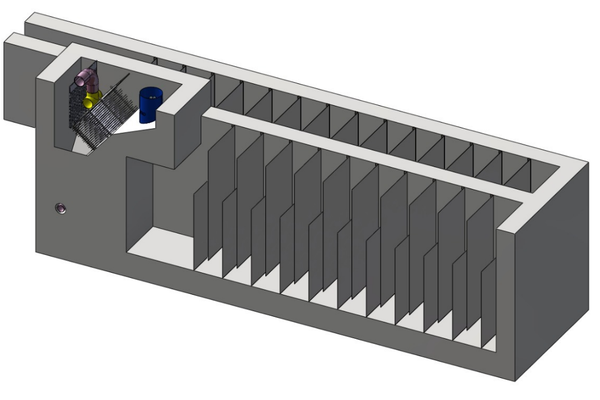
Treatment Trains

Treatment trains vary in complexity depending on the quality of the water at the source and the regulatory requirements of the country in which it is located. In this sense, the better the water quality, the fewer the number of processes t…

DWTP See more
04/11/2021

Raw Water and Treated Water

The water that is extracted from the source (river or stream), before being treated, is called raw water. Ideally, the raw water should be as clean as possible, so that treatment is simple and economical. However, it is becoming increasing…

DWTP See more
04/11/2021

Removal efficiency

Treatment processes aim to remove undesirable substances from the water. Each process has an efficiency in the removal of one or more pollutants of interest. In certain processes, such as decantation, filtration, pondages or reservoirs, th…

DWTP See more
04/11/2021

Sludge Treatment

Sludge is the liquid waste containing the solids removed from water purification treatment and comes from two processes, sedimentation (after coagulation-flocculation) and filtration, as a result of backwashing the filters.

DWTP See more
04/11/2021

Disinfection

Disinfection is one of the fundamental processes in any water treatment plant. Although most of the processes present in a plant are efficient to remove solids and other contaminants from the water. Most have difficulties in removing micro…

DWTP See more
04/11/2021

Advanced filtration

In order to obtain higher quality water, with a lower amount of impurities and contaminants, advanced filtration processes have become essential to achieve this purpose. Advanced filtration is based on the use of membranes, which, dependin…

DWTP See more
04/11/2021

Filtration Through a Granular Bed

The clarified water that leaves the settler enters the filtration system where the water is passed through a bed (sand, sand and anthracite mainly) in order that the particles and certain microorganisms are retained within the bed.

DWTP See more
04/11/2021

Sedimentation

Once the water has passed through the flocculation structure, the water enters the settler and there the formed floc separates from the water thanks to the low flow velocity and the floc's own weight, allowing it to fall to the bottom of t…

DWTP See more
04/11/2021

Dosing of Chemical Products

To promote the coagulation of the water, chemicals known as coagulants are added. Of these we can find several types of chemical products that work in a similar way, varying the presentation and availability in certain regions of the world.

DWTP See more