Advanced filtration
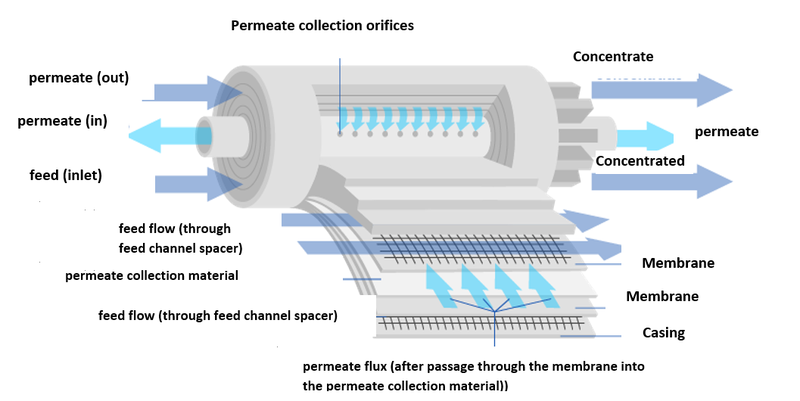
Advanced filtration is characterized by using membranes to separate the contaminants and impurities that the water contains. For this, the membranes have a specific pore size that allows them to remove all particles, molecules and microorganisms that are larger than the pore size.
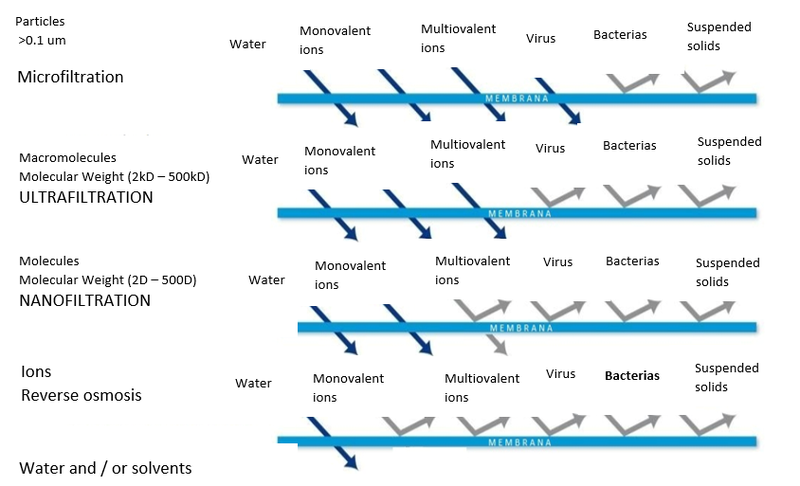
The main classification of advanced filtration establishes four categories: Microfiltration, Ultrafiltration, Nanofiltration and Reverse Osmosis. The differences of each are the minimum pore sizes, being 100 nanometers (nm) for microfiltration, 10 nm for ultrafiltration, 1 nm for nanofiltration and smaller sizes for reverse osmosis. By having smaller and smaller pores, operating costs increase, as the prices for changing the membranes are higher and a greater pressure is required for the water to pass through the membrane.