External Inputs
It refers to the actions carried out to increase the availability of water in a population by transferring water from a neighboring basin and the purchase of water in bulk, among others.

Access methodological guides, glossaries and key concepts to support your projects
It refers to the actions carried out to increase the availability of water in a population by transferring water from a neighboring basin and the purchase of water in bulk, among others.

The representation of a catchment system makes it possible to rganize the information in the image and likeness of the infrastructure on the field. The elements of the catchment system are physical objects that fulfill a specific function …

An intake is a hydraulic structure designed to divert part of the available water from a watercourse (river, stream, or canal), from a lake or even from the sea, generally to convey the liquid to a drinking water supply system.

It is the technique by which through a pump that absorbs mechanical energy and transfers hydraulic energy to move the water. It is used when, due to the difference in heights between the starting and ending points, the transport cannot be …

A reservoir is a hydraulic structure that contains a large water reservoir, where river waters are stored, in order to guarantee irrigation, supply, production of electricity and leisure activities.

When water storage is required to maintain a normal water supply during peak periods or dry seasons, the installation of a pondage or a reservoir is considered to store raw water. Alternatively, ponding helps to regulate the quality of raw…

The raw water collected from the source and transported through the water transmission line carries with its coarse particles that were not retained in the inlet screening. These particles such as sand must be removed by means of a sand tr…

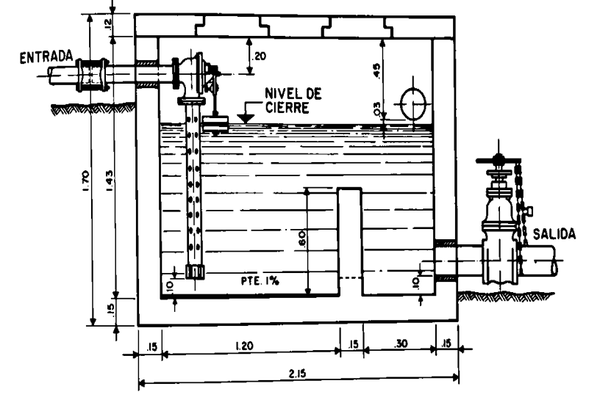
In a pressure pipeline, when the difference in heights from one structure to another is very high, it can cause such high pressures in the pipeline that that the stability of the adduction system is compromised. Therefore, structures such …

Raw water collection structures are located in surface and subway sources and their function is to collect the flow required for water supply, continuously throughout the year and even in times of low water, avoiding the entry of larger el…

The modeling components of WaterProof include the solution of mass balances between the different components of the drinking water collection, distribution and treatment systems, in order to estimate the costs of their maintenance and oper…