Pumping Cost Function
The cost function for pumping is based on the flow of the plant, in addition to the concentrations of nitrogen and sediments present at the entrance of the plant. This article shows how the final equation was arrived at

Access methodological guides, glossaries and key concepts to support your projects
The cost function for pumping is based on the flow of the plant, in addition to the concentrations of nitrogen and sediments present at the entrance of the plant. This article shows how the final equation was arrived at

The cost function for the removal of aquatic plants is a function of the nitrogen and phosphorus load that are removed in both the reservoir and in the pondage. This article explains the process by which the final function was reached

The cost functions for reservoir and reservoir dredging are a function of the retained sediment load. This article explains the process to get to the final function.

The cost functions present to calculate the operation and maintenance costs of the different processes have percentages of participation of three main cost centers: Energy, labor and materials and inputs.

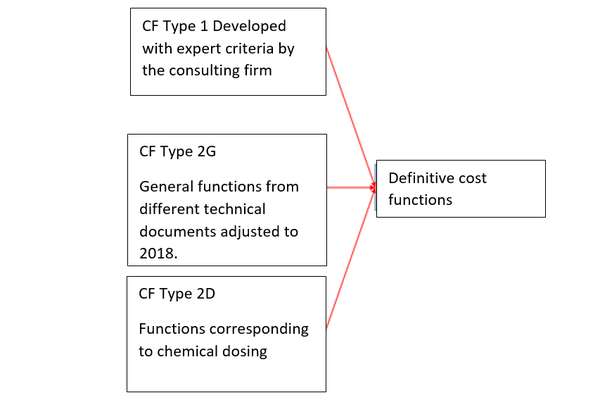
This article contains a brief description of the origin of the definitive cost functions developed in this project, synthetically explaining the steps followed to achieve them.

A database is created in which the type of treatment to be carried out in the water is defined, considering the strict review of different regulations. A categorization system was proposed in which different trains can be defined according…

Treatment trains vary in complexity depending on the quality of the water at the source and the regulatory requirements of the country in which it is located. In this sense, the better the water quality, the fewer the number of processes t…

The water that is extracted from the source (river or stream), before being treated, is called raw water. Ideally, the raw water should be as clean as possible, so that treatment is simple and economical. However, it is becoming increasing…

Treatment processes aim to remove undesirable substances from the water. Each process has an efficiency in the removal of one or more pollutants of interest. In certain processes, such as decantation, filtration, pondages or reservoirs, th…

Sludge is the liquid waste containing the solids removed from water purification treatment and comes from two processes, sedimentation (after coagulation-flocculation) and filtration, as a result of backwashing the filters.