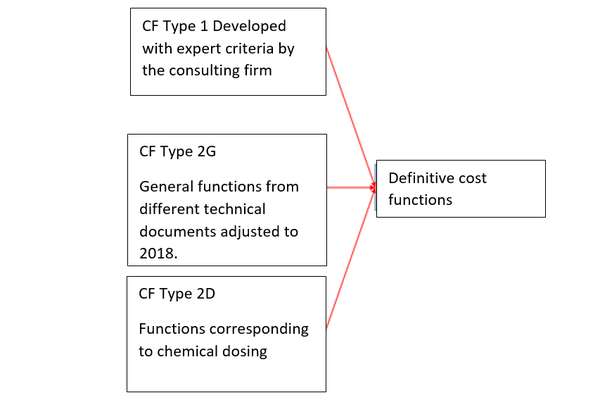
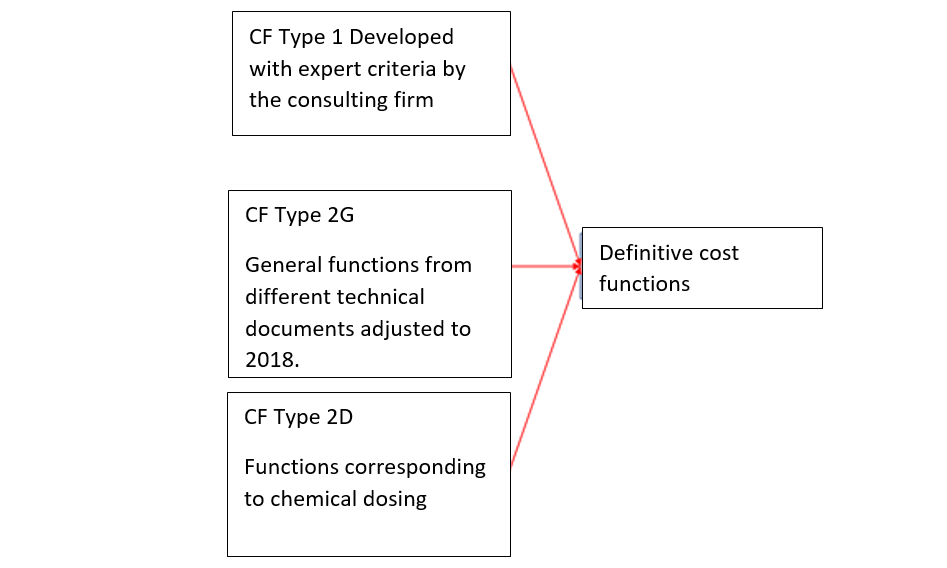
Components of Cost Functions
Operation and maintenance costs can be divided into 3 main cost centers: energy, labor, and materials and supplies.
Energy
The energy can be used both to feed the pumps of a dosing system, as well as for the propulsion of the mixers of the fast mixing and the flocculation, or for the Diesel or natural gas consumed by some vehicle necessary to remove the surface plants of a Pondage.
Labor
This cost center considers the time that operators must dedicate to manipulate valves and other control systems in the various processes. In addition to the special personnel necessary for maintenance, such as cleaning or replacement of certain components.
Materials and supplies
This cost center considers all the spare parts that each plant may need. This includes pipes, fittings, sand beds, filtration membranes, mechanical components, etc. In addition to the special personnel required for maintenance, such as cleaning or replacement of certain components.
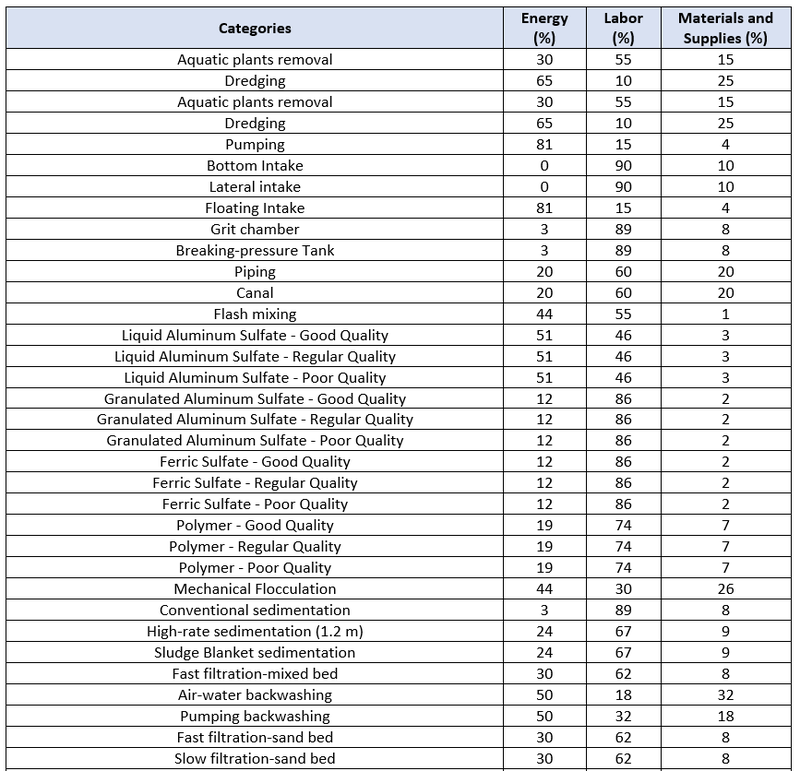
The summary table with these percentage shares is presented below:
Example:
For example, the operating and maintenance costs for a mixed bed rapid filter were calculated to be $15,000. Considering that this has an energy percentage of 30%, labor of 62% and materials of 8%, we could calculate the individual costs as follows:

Energy costs can be due to control systems such as actuators, level gauges, flow meters or equipment used for cleaning the filters. Labor would correspond to the time that the operators must dedicate to the supervision and operation of the filter. Material costs corresponded to the replacement of valves or accessories that could be damaged, in addition to the budgeted costs for the replacement of the filter bed.