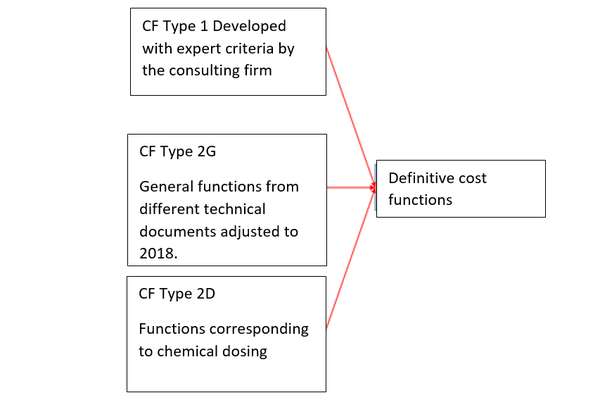
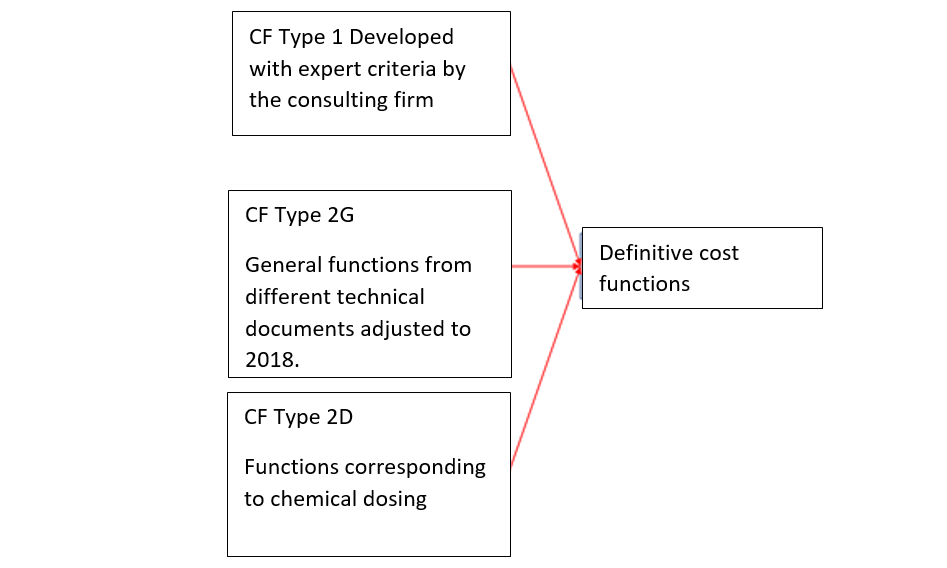
Cost Function for the Removal of Aquatic Plants
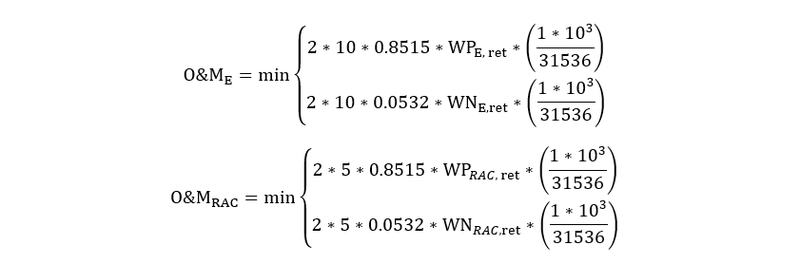
Aquatic plants, such as the water hyacinth, grow on the surface of reservoirs and ponds. These plants grow by consuming the nutrients in water, where nitrogen and phosphorus stand out. Approximately, each gram of phosphorus consumed can make 100 g of water hyacinth grow, while 16 g of nitrogen can make the same amount. Additionally, 1 m2 can contain 20 kg of water hyacinth, and removing one hectare of the plant costs 54 dollars. With these relationships, it is possible to construct the cost function from the retained nitrogen or phosphorus load, considering that, depending on the source conditions, one of these two nutrients can limit the growth of the water hyacinth.

This results in the following equations for both reservoir and Pondage:

Considering that the reservoir and pondage areas are 10 ha and 5 ha respectively and that the frequency in which this process is carried out in the year is semiannual, the equations expressed in terms of load would be given as follows:
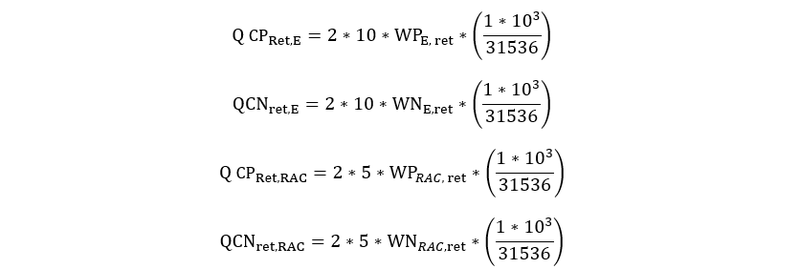
Therefore, the final equations would be: