Bottom Intake Cost function
The bottom intakes have certain similarities with respect to the lateral ones, such as the presence of a dam in order to raise the level of the water sheet at the intake point. However, its main difference, as its name implies, is that the collection grid is located horizontally and below the flow of the stream. The water that passes through the grate reaches a channel that takes it to the collection chamber, from where it can be taken by gravity or pumping to the next process.
In this case, it has been considered that the operation and maintenance costs of this structure are mainly associated with the labor required for the extraction of sediment in the collection chamber. Thus, this function proposes that: the higher the flow rate in the structure, the greater the sediment trapping will be and therefore the greater the frequency and the number of operators necessary for the adaptation. In accordance with these considerations and based on a value of $ 12.46 USD / hour of an operator, the construction of the cost function, it was considered that:

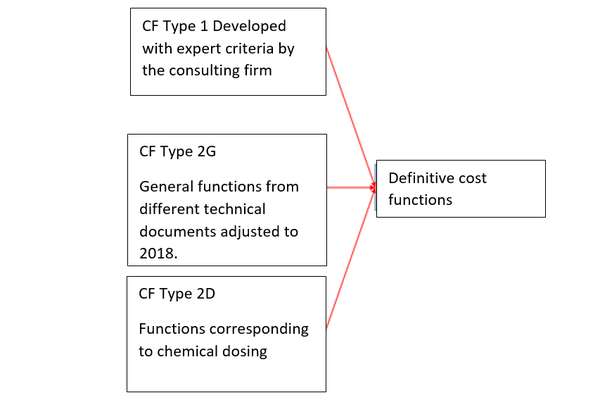
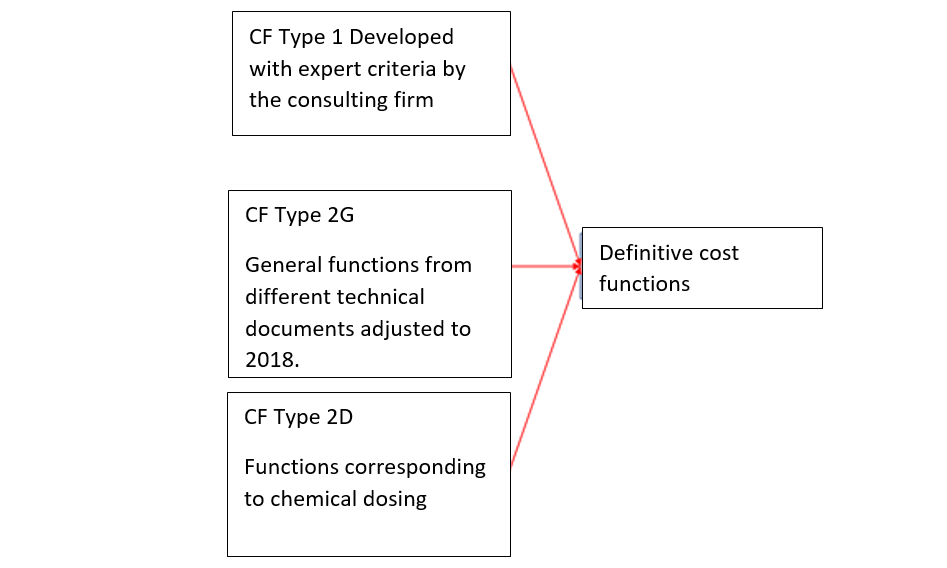
Where Q is the flow that enters the intake in liters / second. Part B2 related to the elasticity index is added to this equation. This is done in the same way as explained in the Cost Functions - General wiki: