Climate change
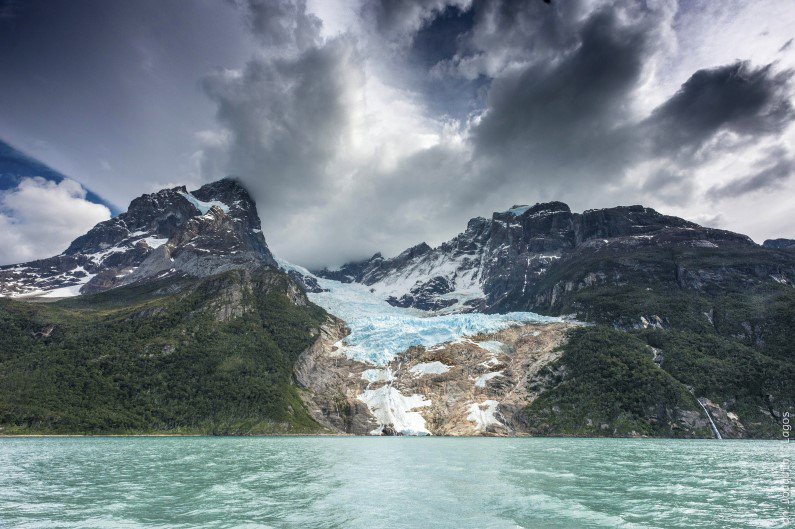
Human activities (transport, industry, deforestation, etc.) generate greenhouse gas emissions. These greenhouse gases modify the composition of the atmosphere by increasing their concentration in it. This alteration in the composition of the atmosphere brings changes in the global climate: increase in temperature, changes in the duration of the seasons, changes in the distribution of rainfall, among others.
The scientific evidence of climate change is indisputable, this according to what is stated by the IPCC (Intergovernmental Panel on Climate Change), a leading international organization on the subject of climate change. [2]
Climate change is produced by the process known as the "greenhouse effect", which causes the so-called "global warming".
The greenhouse effect is a phenomenon by which the gases in the atmosphere retain a part of the energy released by the soil when it is heated by solar radiation, affecting all bodies found on the planet. [3]
Global warming refers to the increase in the temperature of both the atmosphere and the oceans that has been increasing over time, projecting a series of changes in the future.
Global Circulation Models (GCM) represent physical processes in the atmosphere, the ocean, the cryosphere, and the earth's surface. They have the potential to provide geographically and physically consistent estimates of climate change [5] by simulating the response of the global climate system to increasing concentrations of greenhouse gases.
GCMs represent the weather using a three-dimensional grid on the globe, which generally has a horizontal resolution of between 250 and 600 km, 10 to 20 vertical layers in the atmosphere, and sometimes up to 30 layers in the oceans. [8]
Globally, the projections that arise from global climate models (GCM) are widely recognized and used by the scientific community: BCC-CSM2-MR, CNRM-CM6-1, CNRM-ESM2-1, CanESM5, GFDL-ESM4, IPSL-CM6A-LR, MIROC-ES2L, MIROC6, MRI-ESM2-0. The information from these models is available daily for a period up to the year 2100. The WorldClim database provides multi-year monthly averages for precipitation, as well as for evapotranspiration, for four shared socio-economic pathways (SSP): 126 , 245, 370 and 585 in periods of 20 years (2021-2040, 241-2060, 2061-2080, 2081-2100). What is interesting about these data is that it presents a validation and correction of the bias using historical series built with ground stations.
Representative concentration pathways (RCPs) provide projections of atmospheric greenhouse gas concentrations. They are representative because they are one of several different scenarios that have similar radioactive forcing and emission characteristics. [6] That is, with them it is possible to project the future evolution of the emissions of substances that could be radiatively active (greenhouse gases, aerosols, etc.) based on a coherent set of assumptions about the forces that determine them (for example the development demographic and socioeconomic or technological evolution) and the main relationships between them. The concentration scenarios, obtained from the emission scenarios, are used in climate models to obtain climate projections. [7]
The models that were selected to incorporate into WaterProof were:
- RCP-4.5
- BCC-CSM2-MR
- CNRM-ESM2-1
- MIROC6
- RCP-8.5
- BCC-CSM2-MR
- CNRM-ESM2-1
- MIROC6