Agroforestry activities
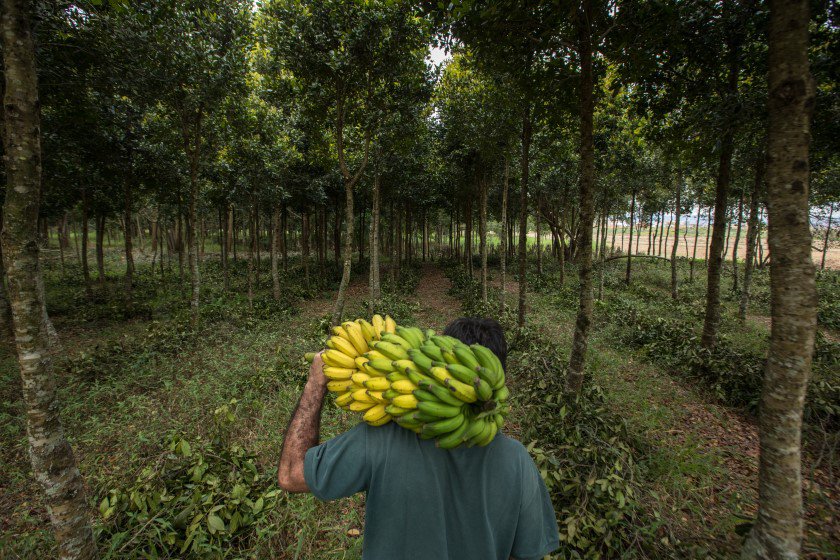
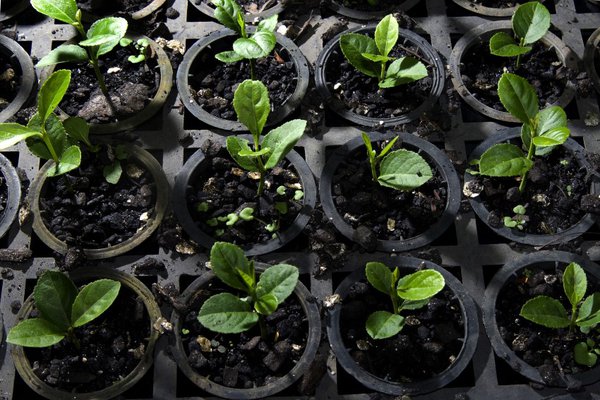
Agroforestry activities refer to land management techniques that seek to increase yields by combining crop production with forest species and/or animals, either simultaneously or sequentially, applying management practices that are compatible with the cultural practices of the local population. In this way, productive plants are actively introduced, usually shrubs or arboreal, often in combination with other species (e.g., coffee with shady or cocoa with banana). In addition, it is common to find additional arrangements that contribute to greater productivity, such as live fences. For 1 hectare of an agroforestry system, around 200 plants, which are scattered throughout the property depending on the drainage conditions, slope and type of soil. Also, they can be arranged as a corridor in the limits of the property. If we take as a reference that a dense restoration scheme incorporates 1500 plants per hectare, it could be assumed that these 200 plants correspond to approximately 13% of immediate coverage at the time of planting.
In agroforestry systems, the tree components and its intrinsic biodiversity fulfill a number of objectives such as: production of wood, fuel, foliage, food, medicine, handicrafts, rubber, resins and fibers. This generates the possibility of reducing economic risks based on the diversification of production and the creation of new jobs in nurseries, collection and propagation of species, planting, maintenance of areas, aesthetic and recreational improvement, etc. In other words, livelihood alternatives are diversified so that farming families can remain in the countryside and avoid their migration to the city. [1]
These practices can be classified into four large groups [2]:
Agroforestry Systems (Trees with Crops)
- Cultivation in alleys
- Shade trees on perennial crops
- Home gardens
- Improved fallows
- Windbreakers and protective fences
- Mix of perennials with other crops
- Agroforestry for the production of firewood
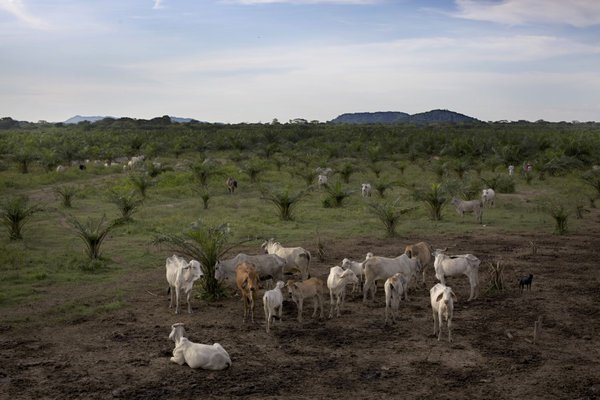
Silvopastoral Systems (Trees with Livestock)
- Live fences
- Pastures with trees
- Protein banks
- Integration of animals with wood production
Agrosilvopastoral Systems (Trees with Crops and Livestock)
- Home gardens with animals
- Rows of shrubs for feeding animals, soil conservation and compost
- Integrated production of crops, wood and animals
In addition to the above, the development of good agricultural management practices constitutes a change in land management to achieve multiple positive environmental results. An example of these are the amendments to improve soils, use of organic fertilizers, pest control without the use of agrochemicals, crop associations, reduction of plowing processes with conventional machinery, incorporation of precision irrigation systems, among others (Mochizuki et al., n.d.).